Monitoring Optimization
Design cost-effective monitoring networks with intelligent sensor placement that balances coverage, cost, and detection speed.
What This Module Does
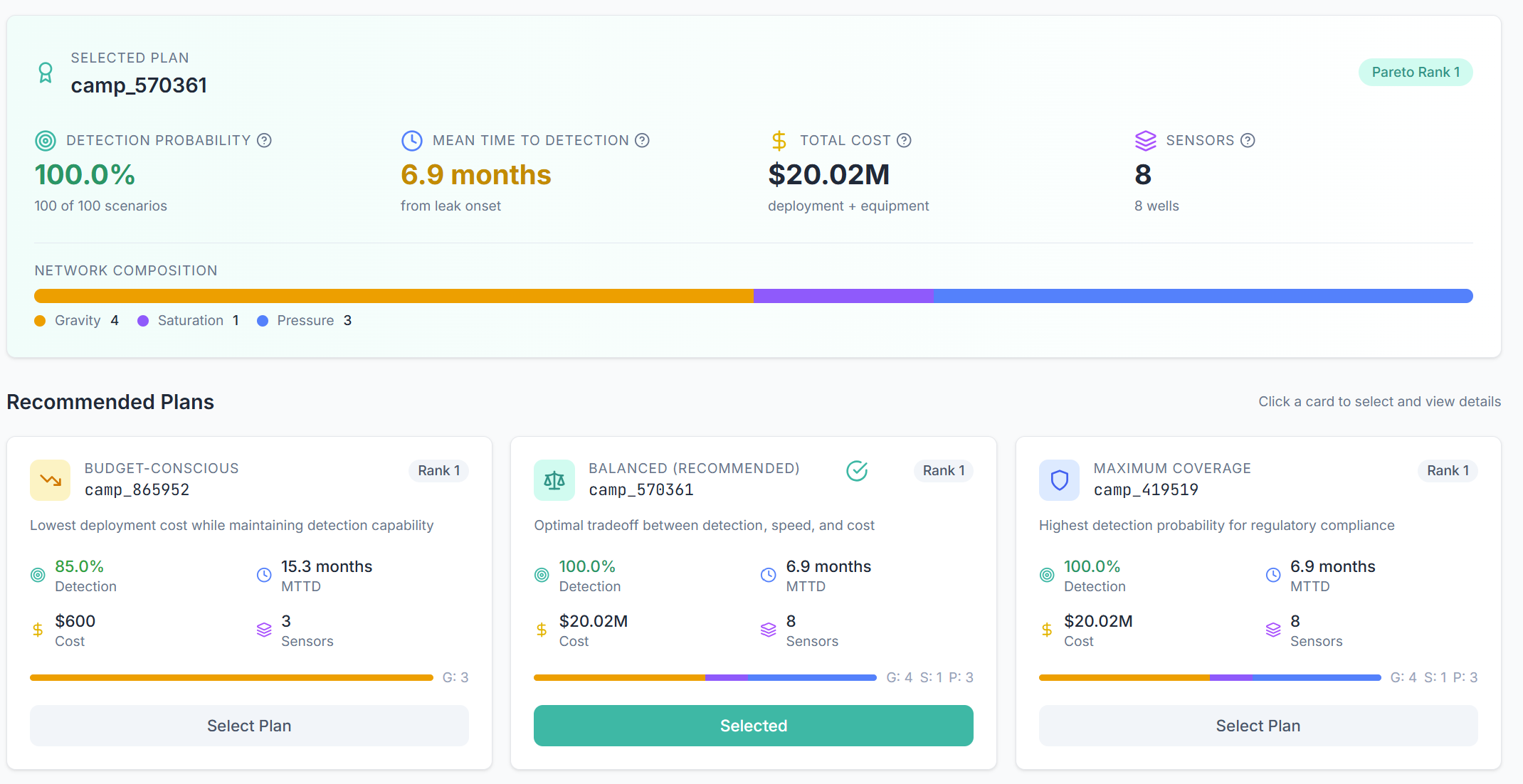
This module helps teams move from subjective monitoring plans to optimized, data-driven network designs. Users upload subsurface simulation datasets, configure detection parameters, and run optimization algorithms that identify the best monitoring strategies for their specific site conditions. The output includes multiple plan options ranked by cost-coverage trade-offs, ready for stakeholder review.
Key Capabilities
- Automated sensor placement optimization using advanced algorithms
- Budget-conscious, balanced, and maximum-coverage plan generation
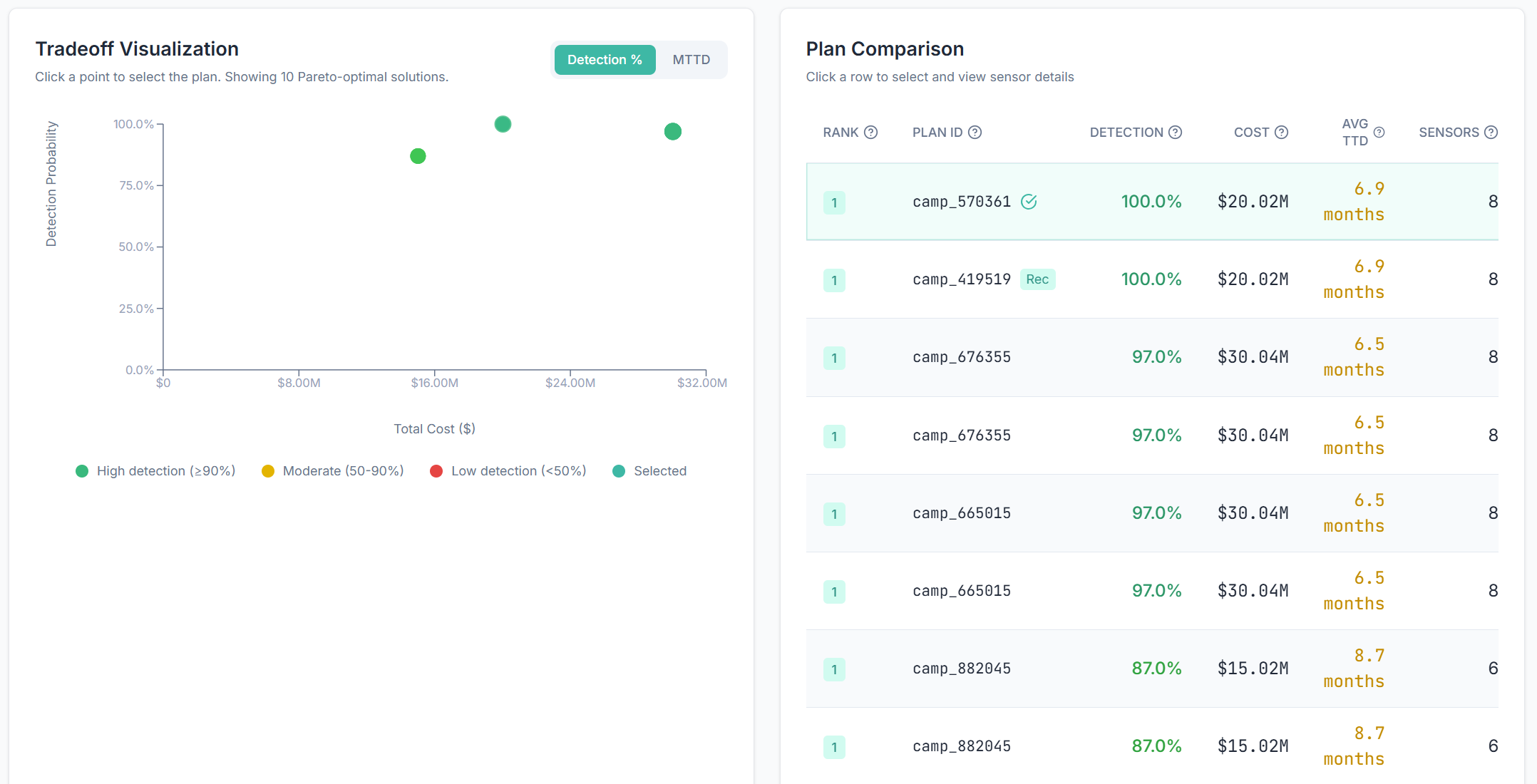
- Pareto-ranked plan comparison with trade-off visualization
- Support for multiple sensor types and detection thresholds
- Multi-format export for integration with field deployment tools
Inside the Module
Frequently Asked Questions
It helps teams design cost-effective monitoring networks by optimizing sensor placement based on site-specific conditions. Instead of relying on subjective monitoring plans, users can generate data-driven designs that balance coverage, cost, and detection performance.
After integrity and leakage assessments have identified areas of concern. It is used when teams need to plan where and how to monitor a storage site — whether for regulatory compliance, early leak detection, or operational assurance.
Where should sensors be placed for maximum detection coverage? What is the trade-off between monitoring cost and detection confidence? How many sensors are needed to meet a given performance threshold?
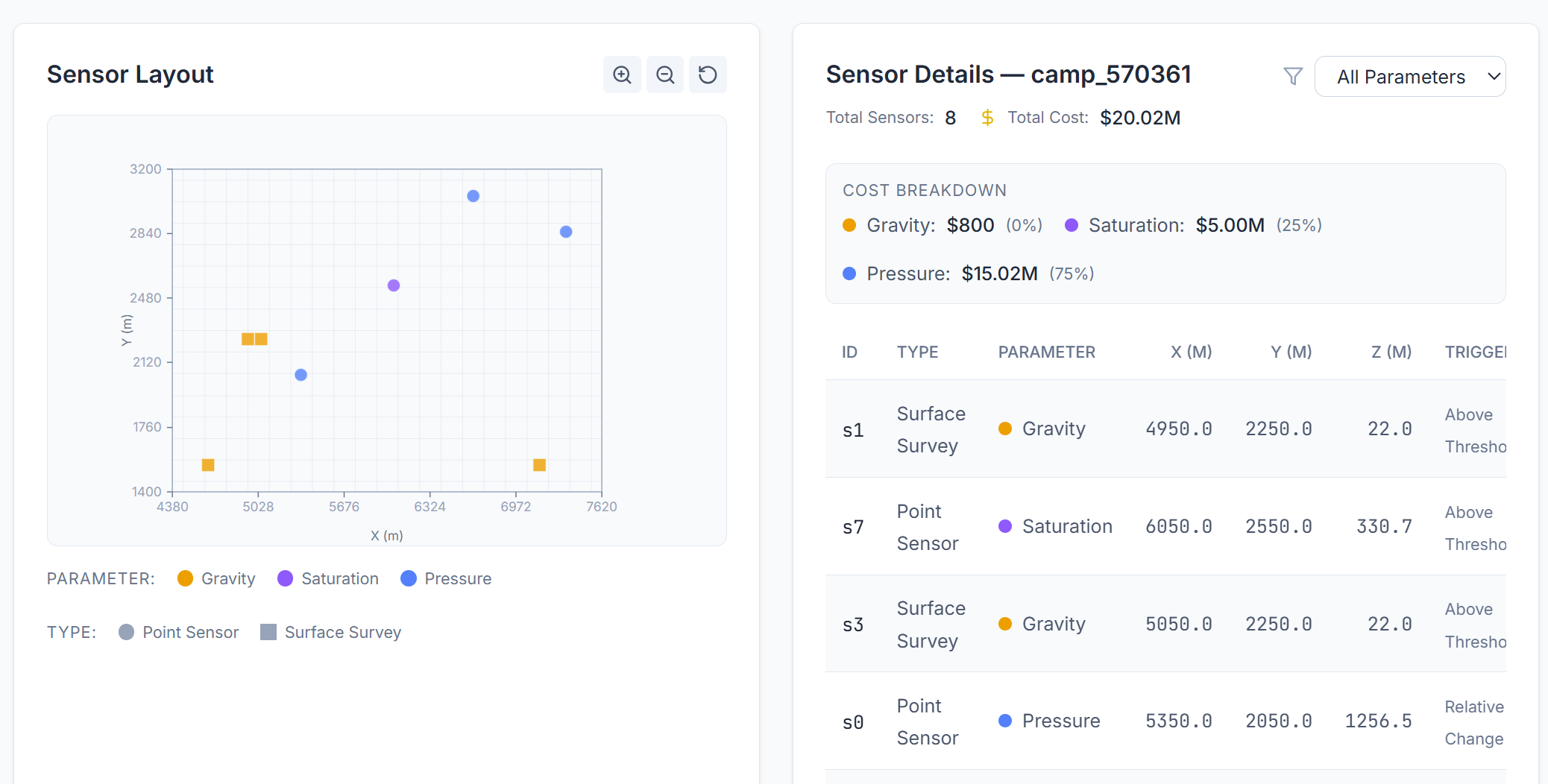
Multiple monitoring plan options ranked by cost-coverage trade-offs (Pareto analysis), optimized sensor placement maps, and exportable configurations ready for field deployment planning.
Monitoring designers, environmental compliance teams, field operations planners, and consultants preparing monitoring strategies for regulatory submissions or project approvals.
Monitoring designs are informed by well integrity assessments and leakage simulations from earlier modules, ensuring sensor networks focus on the areas of highest priority.
Part of the CCS Ecosystem
Monitoring designs are informed by well integrity assessments and leakage simulations from earlier modules, ensuring sensor networks focus on the areas of highest priority.